Practical Category G Auditing, Evidence Evaluation, Nonconformity Writing & Final Competency Assessment
Created by SF Trainings Team
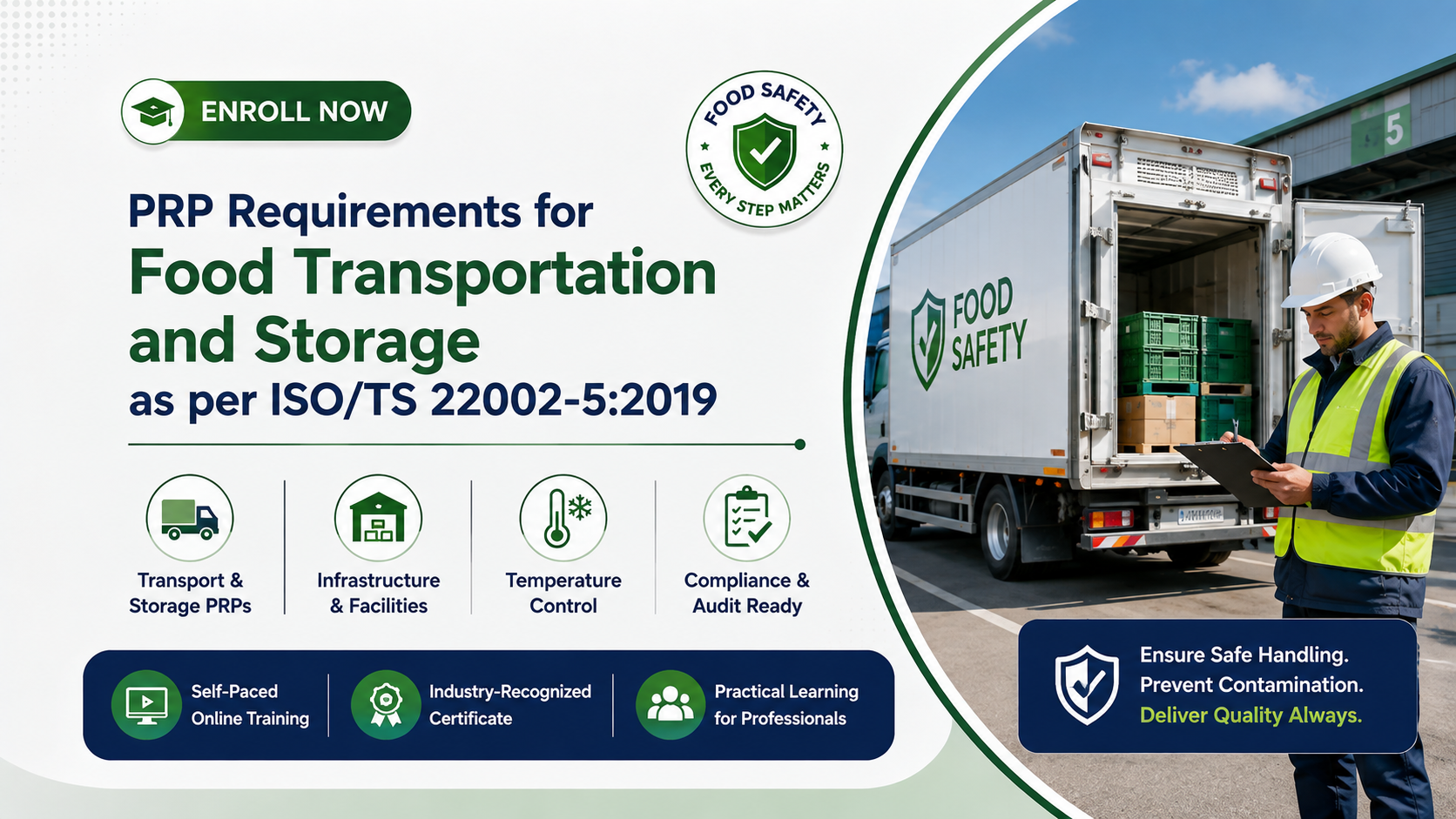
This course provides a practical understanding of Prerequisite Programmes (PRPs) for transport and storage operations under FSSC 22000 Category G. It explains how ISO 22000:2018, ISO/TS 22002-5:2019, and FSSC 22000 Version 6 additional requirements work together to protect food safety during warehousing, cold storage, loading, transport, distribution, and dispatch activities.
Learners will explore key controls related to facility infrastructure, vehicle suitability, material handling, cleaning, cross-contamination prevention, temperature management, stock rotation, traceability, recall readiness, personnel hygiene, pest control, outsourced services, and food defense.
The course also develops practical auditing skills, including risk-based audit planning, evidence collection, traceability testing, evaluation of findings, nonconformity writing, and closing meeting communication. It is designed for food safety professionals, warehouse and logistics personnel, internal auditors, consultants, and individuals responsible for implementing or auditing Category G transport and storage PRPs.
You will learn to:
FSSC Category G Framework
Understand the PRP framework for transport and storage operations under FSSC 22000 Version 6.
ISO/TS 22002-5:2019
Learn how transport and storage PRP requirements apply to warehouses, cold stores, vehicles, and logistics operations.
Facility & Infrastructure Controls
Evaluate site environment, building design, utilities, loading bays, drainage, refrigeration, and storage infrastructure.
Vehicle & Material Handling
Assess vehicle suitability, receiving, unloading, loading, dispatch, pallet condition, and handling practices.
Cleaning & Cross-Contamination
Identify contamination, allergen carryover, chemical exposure, odor transfer, residue, and cleaning-control risks.
Temperature & Cold-Chain Control
Evaluate storage ranges, temperature monitoring, alarms, calibration, excursions, and release decisions.
Stock Rotation & Shelf Life
Apply FIFO and FEFO controls to prevent expired, short-dated, or incorrectly rotated stock from being dispatched.
Traceability & Recall Readiness
Verify lot identification, internal movement, returns, quarantine, withdrawal, and recall systems.
Personnel Hygiene & Visitor Control
Evaluate hygiene requirements for employees, drivers, visitors, contractors, and temporary personnel.
Pest Control
Assess pest prevention, monitoring, trend analysis, proofing, corrective actions, and contractor performance.
Outsourced Service Management
Evaluate controls over contracted transport, warehousing, cleaning, pest control, calibration, maintenance, and security.
Food Defense
Identify vulnerabilities related to unauthorized access, tampering, sabotage, theft, rejected stock, and dispatch security.
Audit Planning & Sampling
Plan Category G audits using scope, process flow, previous findings, incidents, complaints, and risk-based sampling.
Objective Evidence Collection
Collect reliable evidence through document review, site observation, interviews, records, and traceability tests.
Nonconformity Writing
Write clear findings using requirement, objective evidence, identified gap, and food-safety risk implication.
Audit Judgement & Final Assessment
Distinguish isolated lapses from systemic failures and apply evidence-based judgement during final assessment.
Join thousands of learners and build in-demand skills.