Master ISO 22000 PRPs, food safety controls, traceability, hygiene, monitoring, and audit techniques for effective FSMS implementation and audit readiness.
Created by Ms. Priya
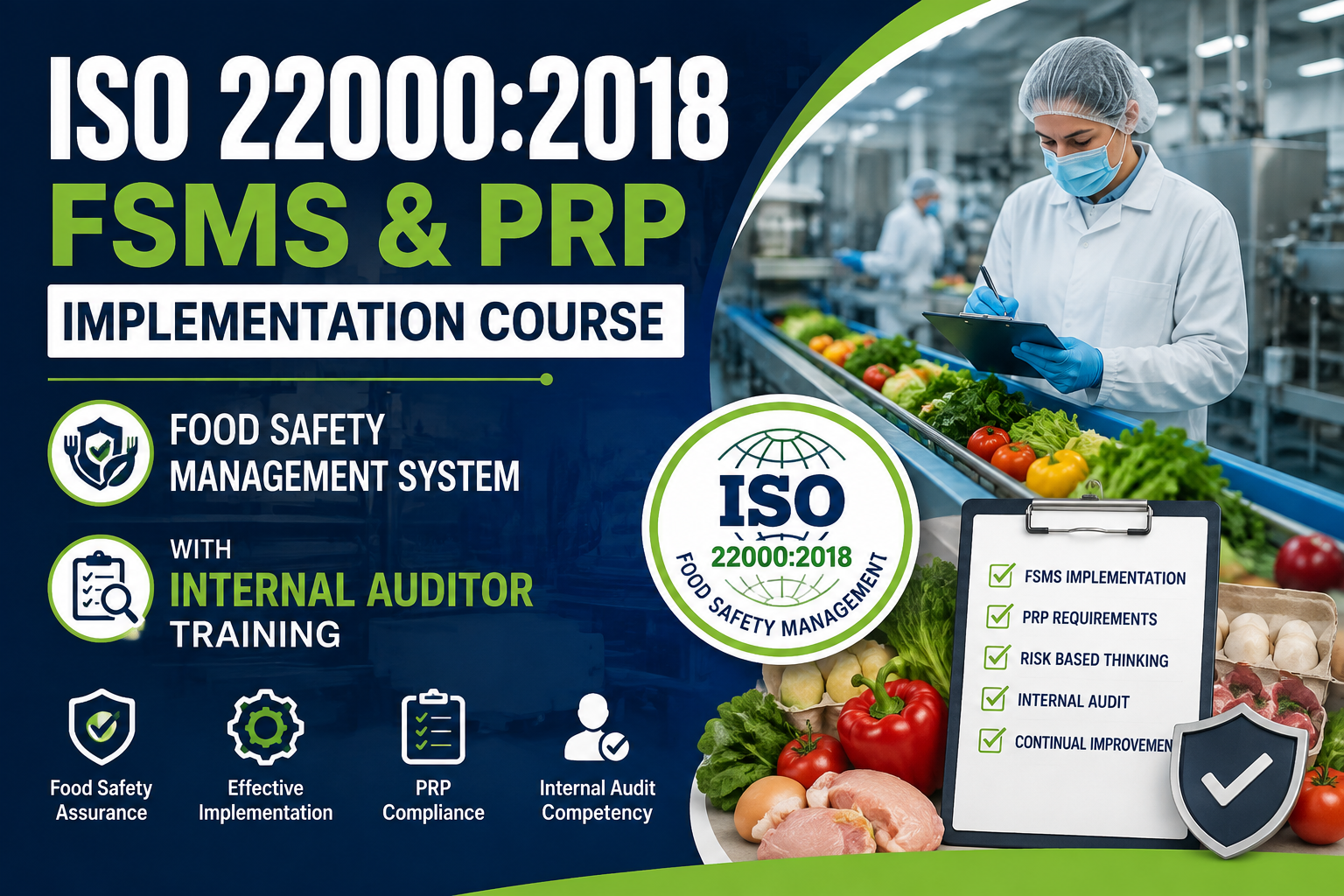
This comprehensive course provides practical, industry-focused training on Prerequisite Programmes (PRPs) and Food Safety Management Systems (FSMS) under ISO 22000:2018. It is designed to help learners understand how food safety controls are planned, implemented, monitored, verified, audited, and continually improved across food operations.
The course covers key areas including PRP selection and implementation, infrastructure and utilities, hygiene and sanitation, contamination prevention, traceability, emergency preparedness, monitoring and verification, non-conformity control, and food safety auditing. It also introduces relevant requirements from ISO/TS 22002-1, ISO 19011, and applicable FSSAI guidelines.
Through practical examples, audit scenarios, and evidence-based approaches, learners develop the skills to evaluate food safety risks, identify system weaknesses, implement corrective actions, and prepare organizations for internal, regulatory, and certification audits.
This course is ideal for Food Safety Professionals, QA/QC Executives, FSMS Consultants, Internal Auditors, Lead Auditors, Production Professionals, and individuals responsible for food safety compliance and audit readiness.
You will learn to:
FSMS Fundamentals
Understand the structure, purpose, and key principles of Food Safety Management Systems under ISO 22000:2018.
PRP Implementation
Learn how to select, design, implement, maintain, and improve Prerequisite Programmes across food operations.
PRPs, OPRPs & CCPs
Understand the differences and relationships between PRPs, Operational PRPs, and Critical Control Points.
Risk-Based Food Safety
Apply risk-based thinking to identify hazards, prioritize controls, and strengthen food safety performance.
Infrastructure & Hygienic Design
Evaluate facility layout, zoning, equipment placement, surfaces, drainage, and hygienic construction requirements.
Utilities & Environmental Controls
Assess water, air, ventilation, temperature, humidity, lighting, and other utilities that can influence food safety.
Cleaning & Sanitation
Develop and evaluate effective cleaning, sanitization, CIP, COP, manual cleaning, and chemical-control programmes.
Personnel Hygiene
Apply hand hygiene, illness reporting, workwear, protective clothing, and employee behaviour controls.
Contamination Prevention
Control microbiological, chemical, physical, cross-contamination, and allergen-related food safety risks.
Pest & Waste Management
Implement effective pest prevention, waste handling, drainage, and environmental hygiene controls.
Supplier & Material Control
Evaluate supplier approval, incoming material inspection, storage, segregation, and material-handling practices.
Traceability Systems
Design one-step-back, one-step-forward, and internal traceability systems linking materials to finished products.
Recall & Emergency Preparedness
Conduct mock recalls, manage food safety emergencies, and control potentially unsafe or non-conforming products.
Monitoring & Verification
Establish effective monitoring and verification systems for PRPs, OPRPs, CCPs, and operational controls.
Validation & Calibration
Understand validation principles and ensure monitoring equipment produces accurate and reliable results.
Non-Conformity Management
Identify product and process non-conformities and apply appropriate correction, segregation, and disposition controls.
Root Cause & Corrective Action
Perform root-cause analysis and develop corrective actions that prevent recurrence of food safety failures.
Food Safety Auditing
Apply ISO 19011 principles to plan and conduct professional FSMS and PRP audits.
Audit Evidence & Techniques
Collect reliable evidence through document review, observations, interviews, sampling, and audit trails.
Risk-Based Auditing
Focus audit activities on high-risk processes, hazards, and food safety controls.
Audit Findings & Reporting
Write clear non-conformities using the requirement–evidence–gap approach and prepare evidence-based audit reports.
Audit Meetings & Follow-Up
Conduct professional opening and closing meetings and verify corrective action closure.
Regulatory Compliance
Understand how ISO 22000 requirements align with ISO/TS 22002-1 and applicable FSSAI expectations.
Food Safety Culture
Recognize how leadership, employee behaviour, competence, and accountability influence food safety performance.
Continual Improvement
Use monitoring data, verification results, audits, trends, and corrective actions to strengthen FSMS performance over time.
Join thousands of learners and build in-demand skills.